


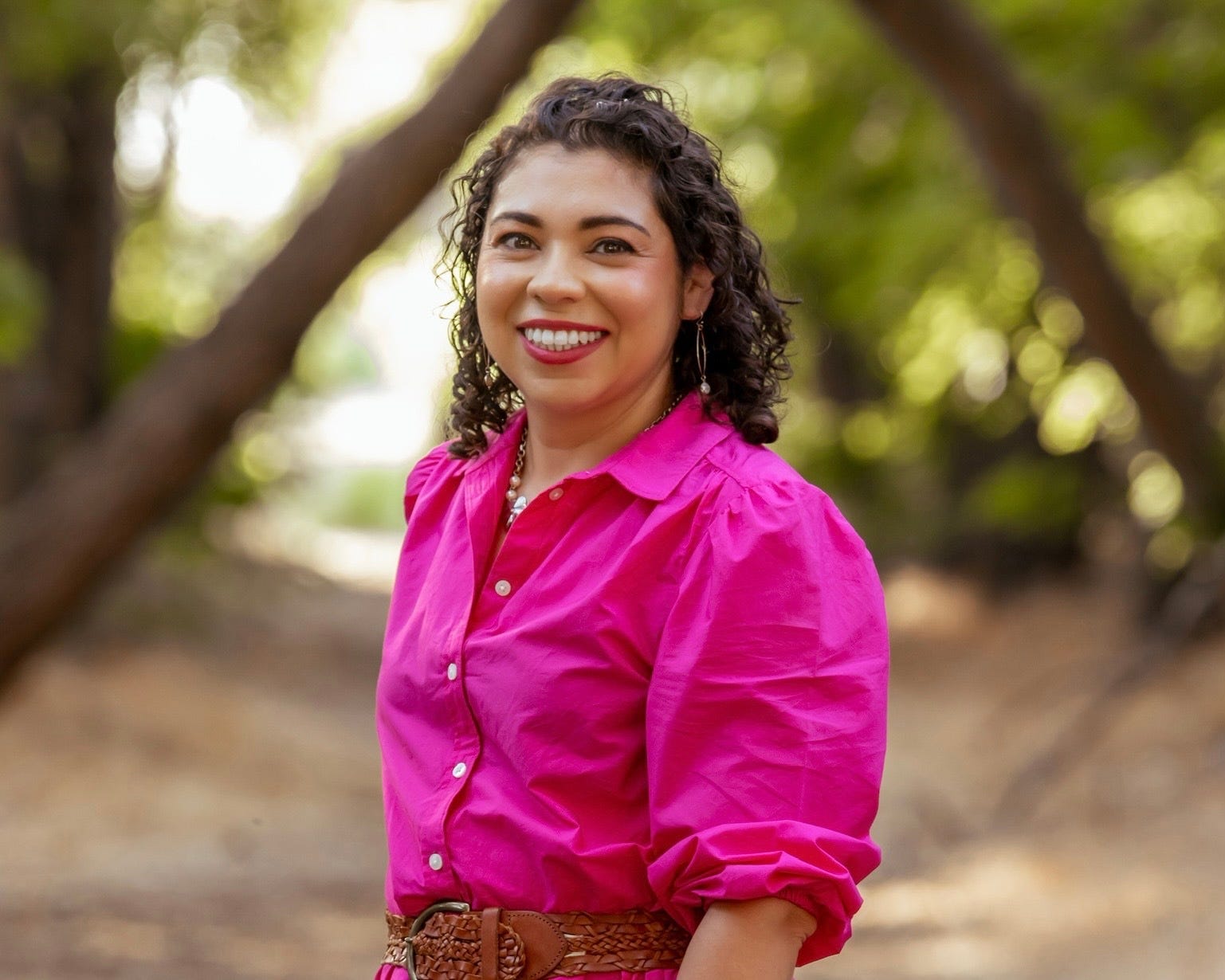
Some interviews start with a list of questions. This one started over Thai food.
Sitting down to lunch with Blanca Torres of KQED, I was immediately struck by her candor. Torres speaks with a mix of clarity, urgency and warmth about the work of journalism, particularly the responsibility to broaden whose voices are heard. As a Latina working in public media, she doesn’t shy away from that responsibility. She embraces it.
What you will discover in this conversation is a journalist animated by the mission of public media and unwilling to accept its limitations. Torres brings a thoughtful and empathetic perspective to the work, paired with an insistence that the stories we tell must reflect the full complexity of American life.
Public media often presents itself as a civic space, one where communities can hear themselves reflected in the news. But building that kind of journalism requires more than good intentions. It demands people willing to challenge traditional assumptions about who counts as experts, whose stories get told, and how audiences are reached.
Blanca Torres works on Forum, a live, daily, call-in show, and is the editor of K Onda KQED, a newsletter focused on the Bay Area’s Latino community. Before joining KQED in 2020, she spent 16 years as a reporter and columnist for newspapers including the San Francisco Business Times, The Seattle Times and the Baltimore Sun. She is a lifetime member and former board member for the National Association of Hispanic Journalists and Lambda Theta Alpha Latin Sorority, Inc. A native of the Pacific Northwest, Blanca earned her bachelor’s degree from Vanderbilt University in Nashville and a master’s in fine arts in creative writing at Mills College.
At KQED, Torres produces conversations that range from politics and economics to culture and literature. At the same time, she has built a reputation for expanding the range of Latino voices in public media, from booking experts and artists on Forum to writing features highlighting important stories to launching K Onda KQED.
In this conversation, Torres discusses her path from newspapers to public radio, the work of diversifying voices in journalism, and the importance of staying curious throughout a reporting career. 👇🏽
What first drew you to public media?
I started listening to public radio when I was in college at Vanderbilt University. I had a part-time job doing publicity for one of the departments, and my supervisor always had a public radio station playing in the background.
I didn’t grow up with public radio. In my house there was always a radio on, but it was usually Spanish-language music stations. So public radio felt new to me.
One of my strongest memories of it happened during my junior year in college, when the September 11 attacks happened. I woke up early to move my car and heard the news on NPR. Hearing that kind of breaking news live on the radio made it feel incredibly immediate. It was one of those moments where you realize something truly serious is happening in the world. That experience stuck with me.
What led you to make the shift to public radio?
Most of my career was in local newspapers covering business, particularly real estate and economic development. I loved being a reporter in the Bay Area because it’s such a dynamic and diverse place to tell stories.
Even though my beat might have been real estate, I was always looking for ways to tell broader stories about diversity, careers, the economy or community change. There’s always a bigger human story behind the business news.
I was working at the San Francisco Business Times when a former manager reached out to encourage me to apply for a producer position at Forum. I had been listening to the show for years, but honestly, if I had seen the job posting on my own, I might not have applied. I had always pictured myself staying in newspapers.
But once I looked more closely, I realized the role offered something exciting: the chance to cover almost anything. Forum might feature a policy expert one day and an author the next. Since I have a master’s in creative writing from Mills College and love books, the idea of interviewing writers was appealing.
The biggest adjustment was realizing I wouldn’t have a byline anymore. As a producer, you’re behind the scenes. I had to ask myself whether I would be okay with that. Six years later, I think the answer is yes.
You joined KQED in 2020. What was it like starting just before the pandemic?
It was a strange time to start a new job in news. I was in the office for about six weeks before everything shut down.
But in journalism, when big news happens, that’s where you want to be. It pushes you to learn quickly and adapt. And the show itself keeps evolving. Hosts change, teams shift, the news cycle changes. Even though the basic task is the same—producing an hour of radio—it never feels repetitive. The topics are always different, and we’re constantly responding to what’s happening in the world.
You’ve worked intentionally to bring more Latino voices onto the air. What has that process been like?
When I joined in 2020, there was a broader reckoning in journalism about race and representation. Suddenly many news organizations were acknowledging that they hadn’t covered communities of color well. I remember thinking, “people have been saying this for decades.” But at least it was finally being recognized.
Public media today is very different from the public media I heard in college. Back then, it often felt like mostly white voices discussing stories that reflected their experiences. The reporting was excellent, but it didn’t always reflect the communities around us. In a region like the Bay Area, that’s a missed opportunity.
On Forum, we bring in experts to explain complicated topics. But when people imagine an “expert,” they still often picture a white man. That’s who tends to get book deals, academic positions, TV appearances and publicists. So part of our job is to look harder, to find experts who have the credentials, but haven’t been given those platforms. That includes finding people with lived experience, not just traditional authority.
How do you approach Latino communities without reducing stories to a single theme?
Too often, Latino stories in the media are framed almost entirely around immigration. That’s an important topic—my own parents are immigrants. But Latino culture in the United States is far broader than that. Many of us are second-generation Americans. Our culture is part of American culture. So I try to approach stories from that perspective.
For example, in one week I produced two Forum shows where every guest happened to be Latino. One was a policy conversation analyzing the death of Mexican drug kingpin and the broader dynamics of the drug trade. The guests were two Mexican academics who offered nuanced analysis I hadn’t heard elsewhere. Later that week, we did a show about a play at Berkeley Repertory Theatre starring actors Jimmy Smits and Wanda De Jesus.
Those conversations show the range of stories: policy analysis, culture, theater. All with Latino voices.
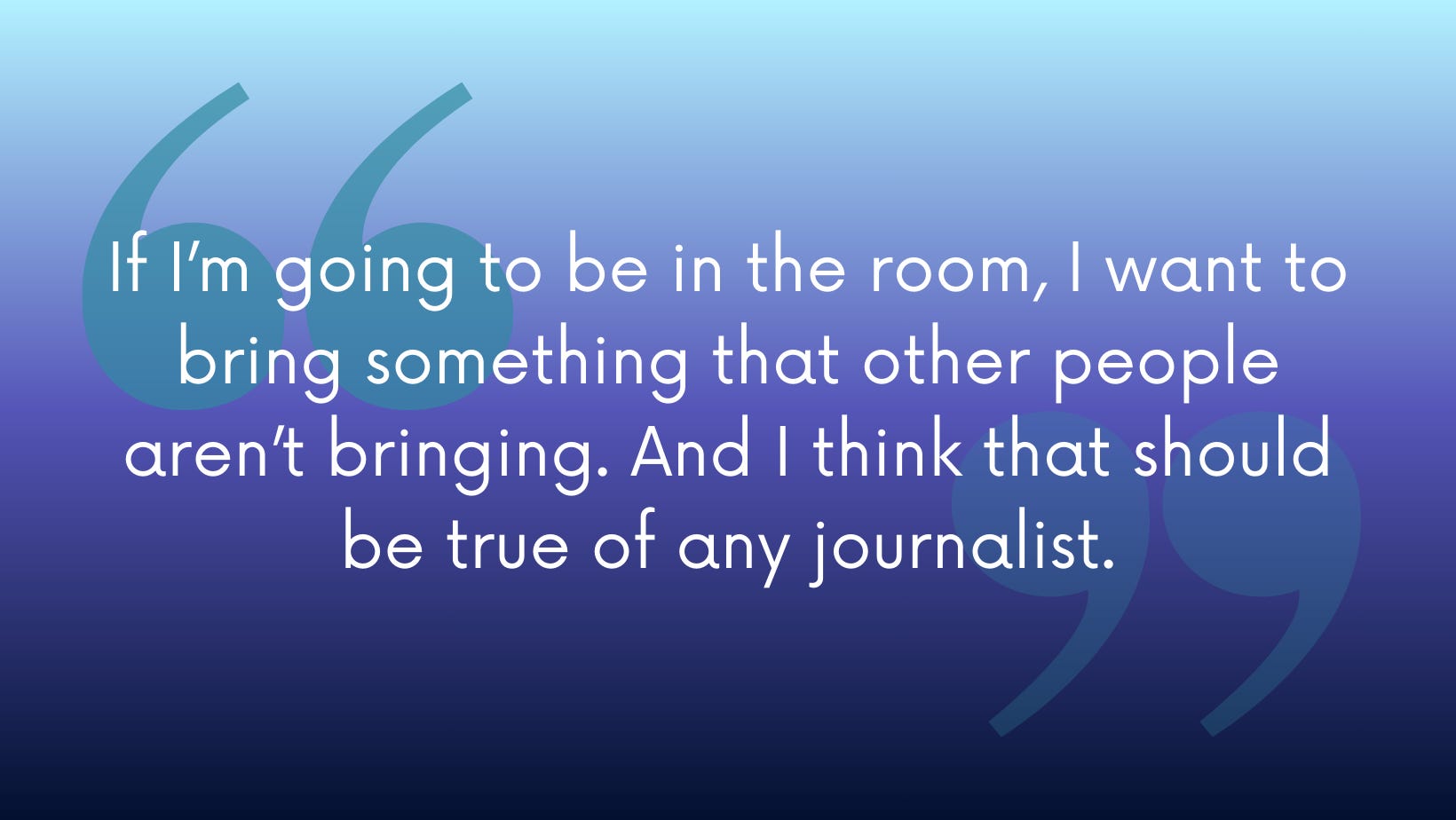
If I don’t pitch those stories, they probably won’t happen. That’s not because I’m special. It’s just because everyone brings their own perspective into the newsroom. If I’m going to be in the room, I want to bring something that other people aren’t bringing. And I think that should be true of any journalist.
Your reporting also covers culture and entrepreneurship. How do you find those stories?
Curiosity is the starting point.
Sometimes a story begins with something small. I once received a pitch about a Latina nail artist in San Francisco who creates elaborate, high-end nail designs. At first it seemed like a simple feature. But as I reported it, I realized there was a much bigger story about the nail industry and how women of color, particularly Black and Latina women, have shaped trends in nail art.
I interviewed an academic who studies the cultural history of nail design, and the story became much richer than I initially expected. It ended up performing extremely well online. That’s a reminder that interesting stories are everywhere if you take the time to dig deeper.
You also write K Onda KQED. How do you balance that with producing Forum?
Fortunately, KQED gives me dedicated time each month to work on the newsletter. That’s essential. Projects focused on reaching specific communities, whether it’s a newsletter or a diversity initiative, can’t just be “extra work.” If organizations don’t provide time and resources, people burn out.
A big part of the newsletter is community outreach. Digital tools are important, but personal connections matter too. Attending events, meeting people, building relationships. That’s especially important when reaching audiences that haven’t traditionally engaged with public media.
What advice would you give newsrooms considering a similar newsletter?
First, be clear about who your audience is. “Latinos” is an enormous category. It includes many nationalities, languages and experiences. You can’t serve everyone at once. When we developed the newsletter, research suggested a particular audience: Latino parents who wanted to pass culture on to their kids. That helped shape our tone and coverage.
The other key is voice. I try to write the newsletter in a conversational way, almost like I’m talking to friends and sharing things I’ve found interesting.
How should organizations think about metrics and audience goals?
Metrics matter, but they need to be used thoughtfully.
At KQED, we have an audience team that helps track things like open rates and subscriptions. I had to learn skills I’d never used before, like writing strong subject lines that make people want to open an email.
The bigger lesson is to focus on what actually moves the needle. If your time is limited, invest it in the pieces that matter most. And be open to feedback, even negative feedback. That’s something newspapers taught me early on. You develop a thick skin, and you learn from criticism.
What advice would you give journalists considering a move into public media?
Be open. Journalism jobs are shrinking, and the field is changing quickly. If you’re willing to learn new formats, you’ll have more opportunities.
For me, moving into public media allowed me to apply the reporting skills I had already built, but in a new medium. Writing broadcast scripts is different from writing for the web. Producing a newsletter involves marketing and audience strategy. But if you love storytelling, there are many ways to do it.
Looking back, what would you tell your younger self entering journalism?
Lean into who you are. When I was starting out, journalism emphasized a very narrow idea of objectivity. We were taught to tell stories the way they had always been told. Over time, we’ve realized those traditions had blind spots.
If you come from a background that has been underrepresented in the media, your perspective is a strength. You may see stories or ask questions others wouldn’t think of. The challenge is being willing to push against the status quo. But if journalists don’t challenge old assumptions, who will? 🟢

Cafecito: stories to discuss ☕
Chavez. The New York Times’ investigation into allegations of sexual abuse by Cesar Chavez is reverberating all over. 🔴 The paper has since published six takeaways from the reporting, including the scandal being buried for years by the UFW and others.
Politico has an interview with biographer, Miriam Pawel. Telling line: “[The] power of what he did and why he succeeded was because of the inspiration and bringing all these people together, and yet the downside of that was that people then looked away from a lot of different kinds of abuse.”
Diverse podcast audiences. Good data on Latine podcast listening, and a related conversation about audio business ownership. 🔥
Streaming undercounts. Mike Shields has an examination of whether Latinx audiences are undercounted by Nielsen when it comes to terrestrial and streaming. 🧮
Influencer shift. New research indicates younger audiences (of which a good percentage are Latino) are increasingly seeking news on social media rather than outlets directly. ✅ TV News Check has details.
Midterm talk. An Univision exec spoke at SXSW about Hispanic voting in November. 🐘 Axios shares comments that include Democrats revising their pitch.
El radar: try this 📡
Track long Covid in Latinx communities. Spokane Public Radio has an investigation of how the ailment is affecting farmworkers. 🫚 However, one can localize this issue anywhere.
Track Hispanics and faith trends. KJZZ hosted a recent conversation about the growth of Latino membership in the Mormon Church. ✨ This comes after years of tensions within the religion.
Watch top local hiring. Chalkbeat has a roundup of reactions to the fact no Latinos are being considered for a top role in running Chicago’s public school system. 👀 Even as DEI has become a third rail in many businesses, parents and teachers still note representation in education.
Continue tracking deportation downstream impact. WBEZ reports on how the city’s Latinx business districts are faring, post-ICE incursions. 💢
Follow the entrepreneurship heat. 🌶️ WHYY covered a local lobbying effort by Hispanic small-business leaders. Sharing their interests and needs with public radio’s audience seems to be a great connector.
See how campus Latine groups are preserving history. The Harvard Crimson spotlights a local story that may be in your area. 📦 When student groups are moved from their offices, what happens to their records and history?
The next OIGO arrives April 10. I’ll be cross-referencing the latest Infinite Dial study against demographic data to offer you insights about Latino audiences your organization can put to work now.
Join me in SLO. The deadline to sign up for the Maynard Institute’s Propel Initiative Regional Training Series at California Polytechnic State University is April 13. I am among the faculty. Sign up here.
SF panel. Next month, I’ll be part of a great panel in San Francisco on AI in journalism. Register here.
🍵 You can buy me a coffee if you’d like to support the newsletter.