



It could be the best year, or the worst.
Among Latine communities, 2025 was a year of fear, resilience and a high-stakes fight for visibility. As public media strives to cover diverse neighborhoods nationwide, 2026 is looking like something different.
The new year may be when public media will have to track slower, deeper shifts beneath the headlines. Midterm elections will grab oxygen. Yet the industry cannot afford to miss the stories reshaping Latino/a/e/x residents.
What stories will lead 2026? Here are a few issues that should be on your radar. There is also a bigger narrative in play: how the country’s diversity landscape is being redefined, often quietly, at the local level.
The financial and political pressures facing public media are real. So are the openings for more grounded, people-centered reporting that cuts through national noise and reflects local reality.
Immigration’s long tail 🧭
In 2026, public media will need to treat immigration as a daily life story, not just a policy story.
Everyone seems to expect the White House’s immigration actions to continue. Thus enforcement and legal uncertainty will not suddenly vanish. What will change is the space to look beyond crisis coverage and into the less-seen rhythms of daily life.
Watch for colleagues’ stories that follow:
How families rebuild routines under persistent enforcement pressure
What schools, churches and local agencies do to stabilize anxious communities
How neighborhoods adapt culturally when fear becomes normalized
Coverage that follows people over time, not just lawmakers, will matter more than it might have in years past. Such will especially be the case in cities where immigration is treated as background noise, not breaking news.
Latino/a/e/x economic futures 💸
The economy is going to be a major issue in the midterms. Even now, prosperity is in the current of conversation. Local public media leaders will have to explain 2025’s economic aftershocks and what they mean on specific blocks, bus lines and workplaces.
Even if policy shock softens, the impact of Trump admin moves and the action (or inaction) of Congress will still be big stories, especially come summer and fall. As Pew Research points out, Latino/a households already have strong opinions about how President Trump and politicians are affecting their pocketbooks. Great public media outlets will highlight how these constituencies sit at the intersection of:
Rising rents and unstable housing
Childcare shortages that limit workforce participation
Persistent wage gaps
Job markets reshaped by automation and AI
What should public media watch for regarding the economy? Expect more coverage from commercial media (and be ready to jump in and lead that coverage) of topics like:
Small-business closures and reopenings
New labor organizing and worker centers
Growing dependence on gig work
AI-driven workplace changes that hit Hispanic workers first
As Kyla Scanlon points out, there’s a trust gap emerging, where economic stress mixed with information overload erodes institutional trust.
Stories about economic mobility, skills training and community financial innovation will surface as powerful threads. To me, the more public media journalists stay close to households, not just data, the more ahead we’ll be.
OIGO’s most popular articles of 2025:
Cultural identity in flux 🎭
After a year when many cultural events shrank or went dark because of safety concerns, 2026 could become a stress test for renewal. The story to watch: How communities are rebuilding public celebrations and rebuilding public confidence.
Public media will have rich opportunities to cover how:
Festivals reimagine security and belonging
Museums rethink exhibits and outreach
Schools navigate which performances feel “safe” to put on
Civic celebrations renegotiate who feels visible and invited
At the same time, journalists can track a deeper set of questions: Does Latine cultural life feel protected or precarious in local communities? Who gets to decide?
No matter how your organization treats matters of race and diversity, the identity shift is going to be a critical story.
Representation in media 📺
The Latino content disparity did not resolve in 2025. 2026 is a chance to measure where progress is real and where it is just branding.
Key questions for public media:
Which stations are investing in bilingual or bicultural programming?
Which podcasts or digital desks are emerging as trusted spaces?
How are Latino/a/e/x journalists navigating new hiring rules and shrinking newsrooms?
Public media can keep reporting on the gap between audience demographics and newsroom composition. We’ll also hear more about the individuals trying to close that distance from inside the system.
Related, as DEI structures keep shifting, public media’s role will grow in terms of documenting institutional impacts. These stories are not just about policy reversals. They are about real-world consequences. It will be important for public media to cover stories for millions of people who may never use the term “DEI,” but live with the outcomes.
Community innovation 🌱
With federal and state support in flux, Latino/a-led organizations are stepping into new leadership roles. In 2026, expect more opportunities to tell stories about:
Grassroots disability advocates
Language justice coalitions
Youth mental health innovators
Neighborhood-based health and mutual aid networks
Public media can track how local problem-solving evolves when communities cannot rely on traditional systems. Public media can explain who is building the new safety nets. Public media can also explore who gets left out.
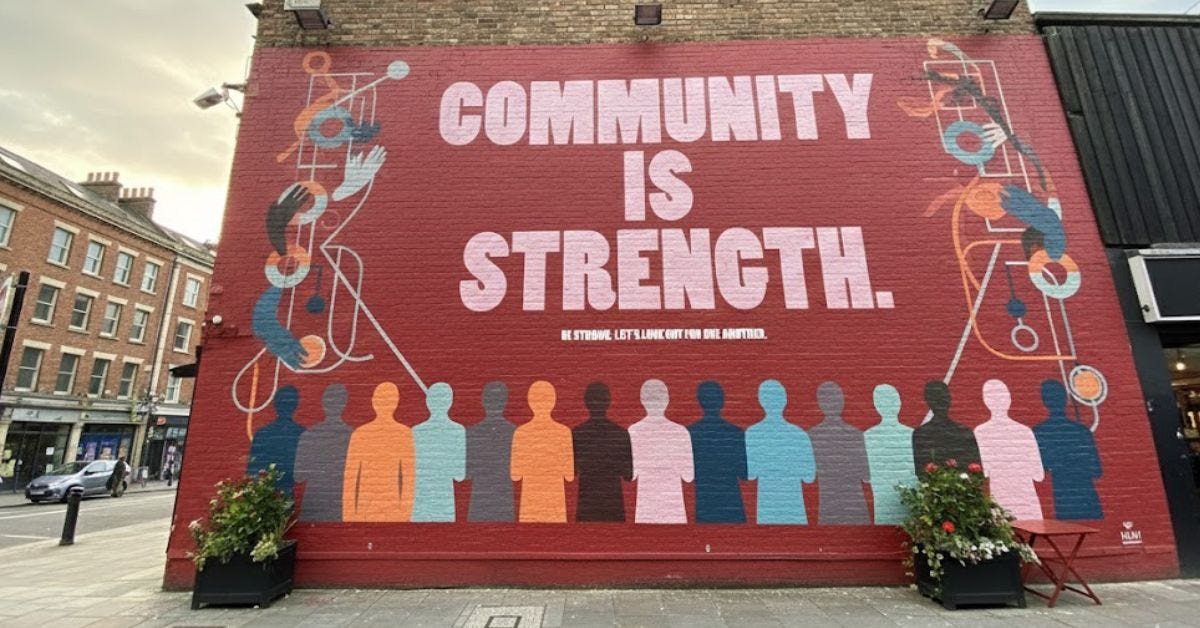
The civic information gap 📡
Midterms will amplify how misinformation remains central in 2026. Latinx audiences will still be navigating parallel information ecosystems that often contradict one another. To help, public media can cover:
How trust is built or broken in local news environments
How Spanish-language and bilingual outlets respond to fast-moving narratives
What audiences say they actually need from institutions that claim to serve them
The key is listening first, then designing coverage.
Why these stories matter
Taken together, these threads point to a pivotal year for public media. It will be the first without federal funding, and one where attention on industry challenges may wane.
How can public media hold the spotlight? I wish I could tell you everything. But I do know one thing: public media will benefit by showing that Latino/a/e/x communities are not just subjects of coverage, but central to understanding how the country is changing.
The stories of 2026 will ask public media to listen more deeply; to question assumptions more openly; and to tell narratives that reflect complexity. 🟢

Cafecito: stories to discuss ☕
Year’s best. Alt.Latino has issued its list of the great Latin songs of 2025. 🎵
Radio Mambi out. The longtime Miami broadcast voice of Cuban exiles is going off the air. 🔒 This comes a few years after the station was acquired by a group that sought to make it more moderate. WLRN has the story.
Seeking asylum. If you’re following the immigration news cycle, Beyond the Border was a well-reported piece on those awaiting hearings in Mexico, after the United States cut off application pathways. 🏛️
Journalists of color, post-DEI. Media layoffs affecting Black and brown staff, but not white employees is the focus of a Guardian investigation. ✍️ “I’m not accusing any one person of looking at my department and deciding to lay off all the people of color,” a source said, “but I am saying that it’s not a coincidence that the layoffs that they chose to do fell along racial lines.”
Just announced. New Media Ventures has launched a cohort for Latine Voices for Democracy, aimed at building capacity among Latino publishers. 👾
El radar: try this 📡
Share stories of tamales and the holidays. Tamale sales seem to sprout during the holiday season and always bring out great memories for residents. 😺 KQED has a story about a local entrepreneur and what the tradition means to customers.
Related: Spokane Public Radio on La Posada.
See how churches are engaging around social services. Colorado Public Radio examines how faith organizations rooted in Latino and other communities are plugged in these days to health care access. ⚕️ Considering churches’ place of trust, they’ve emerged as a valuable stakeholder.
Ask how Hispanic voters are feeling as midterms approach. WLRN is among many organizations doing valuable work tracking the topics on the minds of their area’s Latino/a/e/x voters. 🏗️ There’s a ton of voter sentiment tracking, but local stories really help bring the big picture home to audiences.
Keep tabs on how communities are navigating. A new story at Wyoming Public Radio/Mountain West News Bureau looks at the news cycle and its effect on the town of Rock Springs. 🗻 It’s an smart angle to a story that deserves constant attention.

The next OIGO arrives Jan. 16. It’s time for a holiday break, but I’ll have LinkedIn newsletters flowing as stories break. Subscribe to OIGO RMX here.
You can buy me a coffee if you’d like to support the newsletter. 🤎