


For more than two decades, Rossana Longo-Better has worked to amplify underrepresented voices in Boulder and beyond. Through community radio, bilingual reporting, and public engagement, she has helped bring the experiences of Colorado Latinx communities into conversations that might otherwise miss them.
After immigrating from Ecuador, Longo-Better found an entry point into journalism through her bilingual skills. An opportunity to expand Spanish-language programming at a service for blind and visually impaired listeners has since become a career dedicated to connecting people through storytelling and journalism.
Longo-Better’s work has taken her from community radio KGNU to collaborations with Colorado news organizations, including The Colorado Sun. Along the way, she has produced community-centered programs, trained volunteers, and reported on issues ranging from affordability and health to elections and the experiences of Latine communities.
In this conversation, Longo-Better discusses the responsibilities of public media, the challenges facing emerging journalists, and the importance of earning the trust of the people whose stories we tell. I appreciated her view that journalism requires technical skills and adaptability, but the foundation remains responsibility, community engagement and a commitment to authenticity. 👇
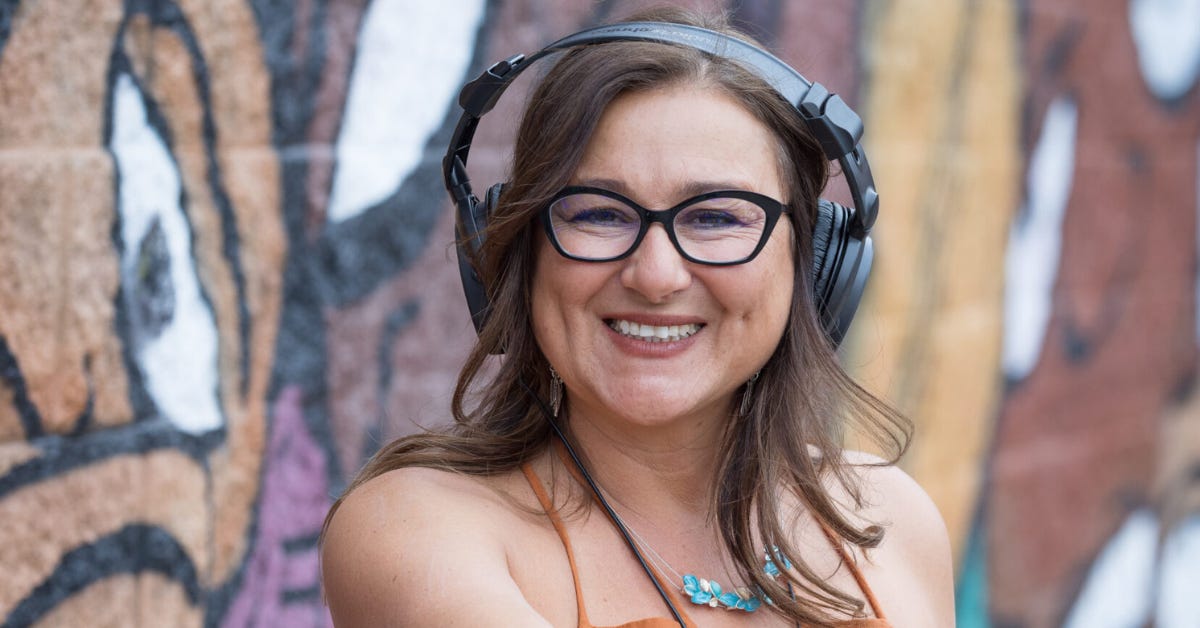
How did you get into radio?
I came to the United States with my family from Ecuador, and I was able to put my two languages to use. Someone learned that I spoke both English and Spanish and told me about Reading Services of the Rockies, a service that provides audio access to information for blind and visually impaired people. They asked me to help expand the Spanish-language programming. At the time, there were only two Spanish-language programs, and I jumped at the opportunity.
I eventually developed a full, 24-hour-a-day, seven-day-a-week Spanish-language production service. I worked there for five years, and I’m incredibly proud of what we built.
During my final two years there, I decided to return to school. I had noticed a significant problem with access. Spanish-language content wasn’t available to many listeners. Also, many people listening to us had internet access only through their phones, not through a home internet connection. We needed to find a way to make our programming accessible to them through radio. I went back to school to understand how we could distribute the content we were producing more effectively.
I earned a master’s degree in Media and Public Engagement from the University of Colorado Boulder, and during that process, I discovered TuneIn, an app that allowed us to make our programming available to more Spanish-speaking listeners.
While I was in school, the League of Women Voters offered me a paid internship in collaboration with KGNU. I became the first intern to be paid through that collaboration. My role was to cover the Latino community and report on the League’s work, including its debates and other activities. That internship opened the door to my first position as a bilingual equity reporter at KGNU in 2019. I worked there through the pandemic and continued until 2022, when I had to step away because my mother was ill and I needed to care for her.
But I told the station that I wasn’t leaving radio. I would continue producing programs as a volunteer, and that’s what I’ve done.
Today, in 2026, I produce Storytellers of Color, a program that has been running for five years. I also previously co-produced a Spanish-language hour, Pasa la Voz, with my colleague Marinela Manero. These programs continue to be an important part of my work, and I also support KGNU’s news director. I’m proud to remain involved. I volunteer because I believe in public radio.
What stories or reporting experiences have been most meaningful to you?
The work I’m proudest of began when I was hired as an equity reporter. We had a collaboration with a community foundation that had published an extensive report, essentially a book, filled with investigative reporting and data about the experiences of vulnerable communities in Boulder County. The challenge was to go beyond the numbers and find the people behind them.
Working with the news director at KGNU at the time, we created a podcast series. Each month, we produced a 30-minute episode, and we also invited people to the station for panel discussions where they could talk about their experiences and continue the conversation. It was an eye-opening project. We started in 2019 and continued through 2022.
I would love to do something like that again because it is so difficult to find programming that genuinely centers underserved communities. We need to elevate the voices of the people who are most affected by the issues we cover, especially those on the front lines.
I consider myself part of a frontline community, too. As journalists, we need to be present where things are happening. The pandemic made that especially clear. Members of Latino communities working in construction, cooking, cleaning, and other essential jobs faced significant exposure to COVID-19. I was also doing frontline work by reporting for the community.
That experience reinforced why it matters to be there, listen, and make sure the people most affected by an issue have the opportunity to tell their own stories.
What advice would you give to journalists who are just starting their careers?
It is a complicated time to be a journalist. We face enormous competition, including from content creators. I want to acknowledge that these creators can be incredibly talented and produce excellent work. Yet the rise of influencers has changed how journalism is perceived around the world.
Young journalists need to become multimedia storytellers. They should learn to write well, take good photographs, investigate stories, work with data, produce video, and use social media effectively. I also think we need to be thoughtful about how we use these tools. During my time at KGNU, there was a strong desire to put content on social media because we couldn’t always be physically present with the people we wanted to reach. In some ways, we overused those platforms.
My first piece of advice is to explore different forms of media and build your own portfolio. For example, I have a media platform I started while I was in school. When I interviewed people, they would ask where they could find my work. I would send them links to KGNU, Radio Bilingüe, Boulder Reporting Lab and other news outlets, including bilingual projects I worked on with Colorado Community Media. Eventually, people told me I needed one place where they could find everything.
That is so important. Have a solid platform where you can showcase your best work and present it the way you want it to be seen. When you leave a job, the organization moves on. It has other people producing content, and your work may no longer be as visible. Take care of your work from the beginning. Save your content, preserve it, and create a place where you can share it professionally.
My second piece of advice is to keep your personal social media and professional life separate. I learned that through experience. When I worked for an organization, I was expected to publish and promote content through its platforms. Of course, when you are employed, you have to follow the organization’s rules. But when you leave, you also need to have maintained your own professional connections.
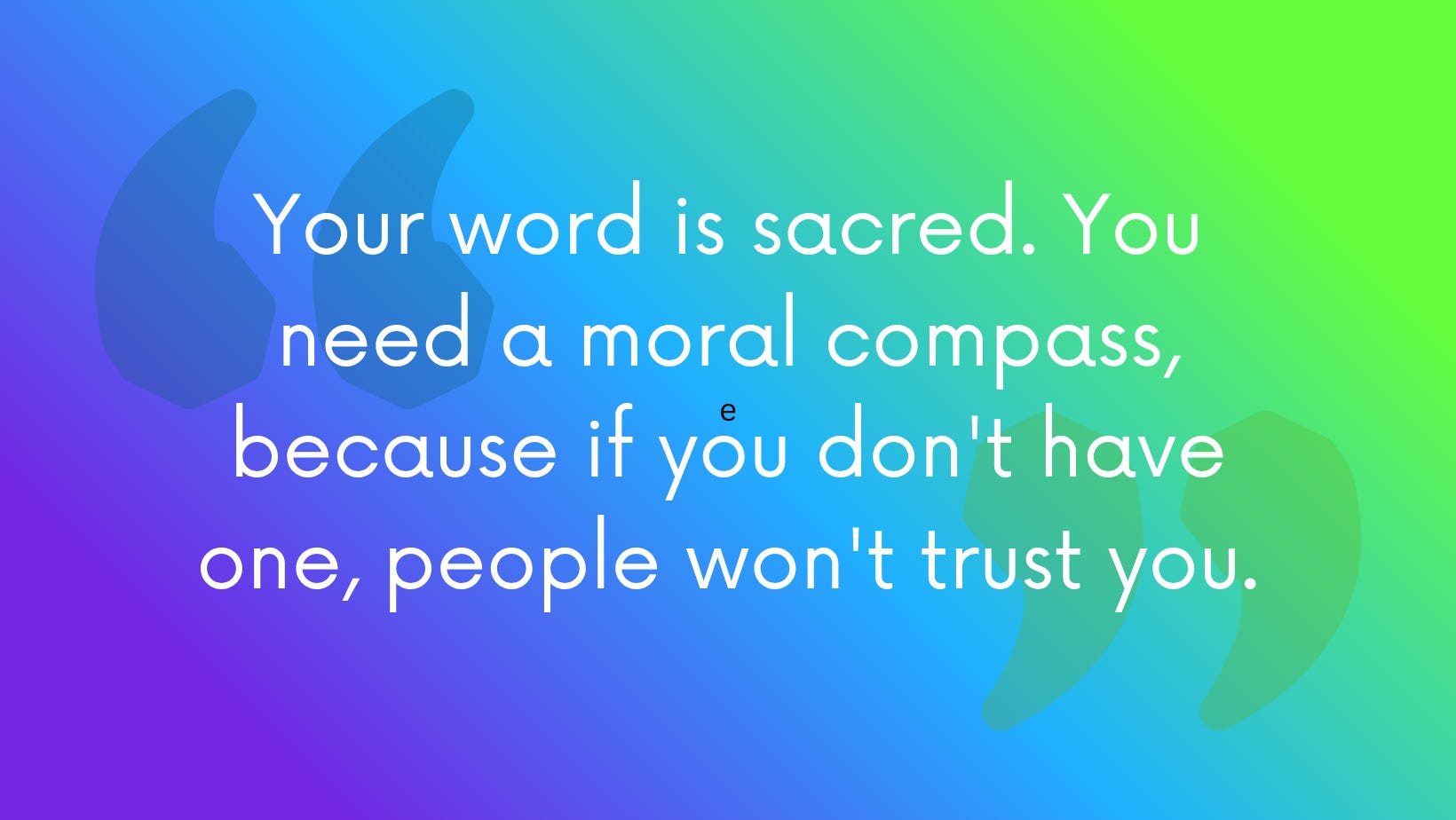
Those are practical lessons, but the most important thing is to keep your word. Your word is sacred. You need a moral compass, because if you don’t have one, people won’t trust you. Trust is essential: the trust of the community you serve and the trust of the people who hire you. You have to follow through on what you promise and be consistent in how you present yourself. The rest follows from there.
You can continue doing meaningful work in journalism even when you aren’t in a full-time position. But you must keep your word and maintain the highest ethical standards.
One thing to understand about journalism is that people can love you and hate you in equal measure. When you cover their stories, they love you. When you don’t, they may be upset with you. You have to be prepared for both reactions and continue doing your work.
What do journalists misunderstand about engaging with and covering Latino communities?
The most common misconception is that language is an insurmountable barrier.
People sometimes say, “We don’t speak Spanish, so we can’t cover these issues,” or they worry that they won’t be able to provide the same quality of information because of the language barrier.
But serving Latino communities requires more than speaking Spanish. It requires understanding the community, recognizing its diversity, and making a genuine effort to provide accurate, accessible information.
I’m fortunate to be doing work now under contract with The Colorado Sun, an organization known for its investigative reporting in Colorado. The publication was founded by journalists who wanted to create a serious, reliable, nonpartisan news organization committed to pursuing the truth through in-depth reporting.
That kind of journalism is especially important for Latino communities. We need to understand ballot measures, amendments and propositions. We need to know where the money is coming from, who is behind these proposals, and what they are actually asking us to approve. These issues are not always straightforward.
When I first began translating ballot measures and propositions, I learned how easily the opening language could lead you to one conclusion. You might read a proposal and think, for example, that it is simply about protecting animals from hunting. But when you read further, you may discover that hunting permits also provide funding for forest management and care.
You need to understand the existing rules, why they were established, and who stands to benefit from changing them. You also need to examine who is funding a proposal and whether those interests reflect the needs of Colorado communities. Those details matter.
We need to use every available resource to get verified information to Spanish-speaking audiences. But we also need to recognize that not all Latinos speak Spanish. Some are second-, third-, or fourth-generation Americans who no longer speak the language. We need to serve them, too, and respect their experiences. Many families stopped speaking Spanish because they wanted their children to avoid discrimination. I know parents who were told to speak only English at home so their children wouldn’t be segregated or treated differently. People sometimes hear an accent and assume that someone is less intelligent or less capable. They don’t understand that a person may be navigating two languages, and that their Spanish will not necessarily sound like their English.
Language is part of this conversation, but it should never be used as a reason to exclude people from the information they need.
Our responsibility is to make journalism accessible, accurate, and relevant to the communities we serve.
What advice would you give your younger self?
I had the opportunity to interview María Hinojosa of Futuro Media when she attended a conference in Colorado. She is someone I deeply admire, and I told her that I sometimes felt I wasn’t the right person to do this work. I was experiencing what is known as imposter syndrome. She laughed and told me, “Rossana, there’s no time for that fear.”
There is so much urgency in covering the issues that affect our communities and doing the work that serves their well-being. There is no time to lose by convincing yourself that you are an imposter. Just get the work done, she told me, and your work will speak for itself.
I have carried that advice with me. I would tell my younger self not to be afraid, to believe in herself, and to keep going because she loves what journalism is all about: pursuing the truth, even when the truth isn’t pleasant. 🟢
Cafecito: stories to discuss ☕
Election inspiration. If you missed it, Radio Bilingue’s Spanish-language Election Night coverage is posted. ✅ It featured voices from Conecta Arizona and KDNA. Well worth a listen.
Related: A similar example on Native issues and candidates here.
Speaking of… The Alliance of Rural Public Media just looked back on how the country’s largest Latinx public radio network grew from the San Joaquin Valley.
It was the economy. 58 percent of more than 3,000 Latine voters surveyed put cost of living in their top three voting issues, while immigration ranked sixth, via a new UnidosUS poll. 🔥
Related: NPR tracks this swing as around 21 points to Democrats this time.
Spanish-language election ad spending gap. Two-thirds of Texas Hispanic voters want Spanish outreach, yet only 1.5 percent of the state’s GOP Senate ad money went to it, according to the SA Current. 💸
Downturn. Puerto Rico’s public broadcaster WIPR is deep in the red. The organization at least $6 million to steady payroll, licensing and equipment. 📢 Metro has more.
Felicidades. Araceli Gómez-Aldana has been named one of the interim hosts of WBEZ’s flagship In The Loop program. 📻 Axios Chicago has the story.
Miami developments. You might recall the scandal over the sale of Miami’s Radio Mambí a few years ago. Now, the conservative cable and digital news outlet Newsmax is buying it from the Latino Media Network. 📈 Newsmax says Spanish-language programming stays. The deal awaits FCC approval.
El radar: try this 📡
Track how young Latinos are voting. For WLRN, Tim Padgett's precinct reporting, built on FIU polling, spotlights how young Latinx voters are breaking from their families' votes. 🔍
Ask how immigration and the economy factored into Latine voting. These are still hot topics post election, and KVCR’s IE Latino Voices’ post-election edition weighed the economy against immigration for California Hispanics. 📊 WABE publishes a piece on Georgia’s Hispanic residents.
Honor veterans in Spanish. KRCB and KPJK announced a week of Veterans Day documentaries in Spanish. 🫡
See how culture is being injected into fitness. KQED profiles Pilates instructors who are using a subgenre of Mexican regional music to make workouts more culturally fluent. 💪
The next OIGO arrives Dec. 4. Together, we’ll sit with KUNR’s Maria Palma. She wears many hats, which include youth programming, local reporting and Spanish-language broadcast content. 🎙️ She’ll reflect on the wins, the challenges and the needs she sees in public media. She’s a dynamic leader who is sure to get you thinking.
You can still get OIGO next week and the next! There’s a short gap for the upcoming holiday for free editions of OIGO, but paid subscribers will receive two special newsletters until December. If you want to receive exclusives as well as those noted above, consider a paid subscription. Right now, you can even get 20 percent off. Take advantage here.
I’m still in Colorado, but advance thanks to everyone I met at the Rocky Mountain Community Radio gathering in Boulder. ⛰️ I'll be sharing my takeaways from the event next week in my new column appearing in Radio World. I wrote regularly for Radio World during my tenure at the National Federation of Community Broadcasters, and it's nice to rejoin Paul McLane and the team.
🥤 You can buy me a coffee if you’d like to support the newsletter.