


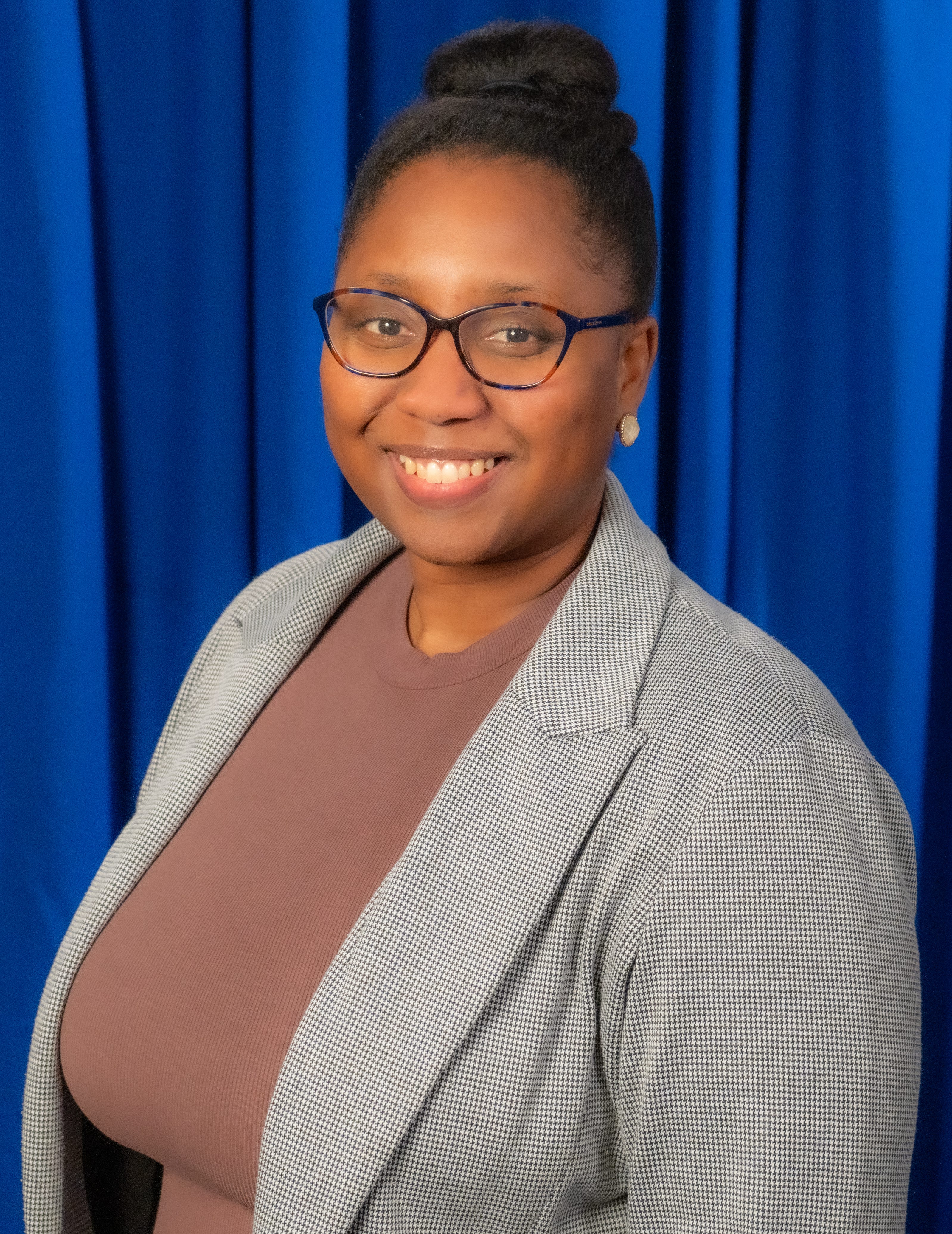
In her first full-length documentary, Making NEPA Home, Kara Washington steps into the role of filmmaker with compassion and a deep understanding of the region she now calls home. As a producer at WVIA, the PBS and NPR affiliate for Northeastern and Central Pennsylvania, Washington took on the challenge of creating a film that would reflect the evolving identity of this historically immigrant-built region, and to help viewers see their neighbors in a new light.
Originally from Nassau, Bahamas, Washington brings both a personal connection to migration and a passion to tell community-centered stories. Her documentary, which highlights recent waves of immigration to the region, began in the wake of national conversations about inclusion and belonging. The result is a powerful, intimate look at individuals and families carving out new lives in a place with a long and complex history of immigration.
Kara Washington earned her Bachelor’s Degree in Mass Communications from King’s College in Wilkes-Barre. In addition, she is an award-winning marketing professional with five American Advertising Federation of Northeastern Pennsylvania Awards, three Pennsylvania Association of Broadcasters Awards and a Mid-Atlantic Emmy nomination to her credit. With five years of experience in marketing campaigns, Washington specializes in video editing and graphic design, bringing creative vision and strategic execution to projects. Making NEPA Home is her directorial debut. She has also produced a Heritage Awareness digital series, showcasing cultural preservation efforts and is a producer of WVIA Pop Shop, a pop culture podcast that explores films through an engaging lens.
I spoke to Washington about her journey, the collaborative process behind the film, and what she hopes audiences will carry with them after watching. 👇🏼
Tell me a little bit about the area. What made it feel like the right place to ground this story?
Northeastern Pennsylvania has a deep history rooted in immigration. It started with the coal mining industry, and it’s grown from there. This region has always been shaped by waves of new families and different cultures making a home here.
At WVIA, we’ve told a lot of historical stories about this area, and it just made sense to build Making NEPA Home here. The community has always been diverse, and that history was already telling us that these are stories worth sharing.
You’re not a lifelong filmmaker—you’ve worn a lot of hats at WVIA. What compelled you to create this documentary?
It came from two places. Personally, I’m originally from Nassau in the Bahamas. My dad is American, so I was born a U.S. citizen—I’ve never had to worry about paperwork or visas—but I do know what it feels like to leave the only home you’ve known and start fresh in a new place.
Professionally, at WVIA, we’d been having internal conversations about how we reflect our community—how we hold up a mirror. If people are talking about something, we want to be part of that dialogue. So it felt really natural to build something that reflected both where I come from and the conversations we were already having as a station.
WVIA is a relatively small station. Do you think that gave you more room to take on something like this?
Absolutely. We’re a small team, and yeah, that sometimes means you’re doing a little bit of everything, but it also means you can bring ideas to the table and actually see them happen. We have radio, TV, digital—we touch all of it. And our CEO, Carla McCabe, is really open to creative ideas. If you have something you’re passionate about, and the team is behind it, you’re empowered to make it happen. That’s how this project came to be.
What sparked the original idea?
After the Tree of Life synagogue shooting in Pittsburgh, we started having conversations about hate and extremism, and we produced a program called Holocaust Warnings, which looked at antisemitism and how history can help us understand what’s happening now.
That opened the door to deeper conversations, and we wanted to expand that lens—look at more communities, more experiences. That’s how Making NEPA Home started. We’d done a lot on historical immigration, especially around coal mining. This time, we wanted to focus on more recent immigrant and refugee experiences.
How did you connect with the people featured in the film?
We relied heavily on local organizations like United Neighborhood Centers of NEPA and Catholic Social Services. They work directly with refugees and immigrants. We didn’t go in with a checklist of who we wanted to feature. It really came down to who felt comfortable sharing their story on camera.
We were very transparent from the beginning. We let people know where the film would be shown, how it would be used. It was important to us that people felt fully informed and in control of their own stories.
You’ve done other storytelling work that connects with the community. What led up to this?
A few years ago, I produced a digital heritage awareness series where we spoke with people throughout the region to celebrate cultural history—Black History Month, Hispanic Heritage Month, Asian American and Pacific Islander Heritage Month. We just wanted to make it clear: WVIA is here, and we care about the full picture of who lives here.
Doing that kind of outreach helped us build trust. It helped people see that we’re not just showing up with a camera. We sre really trying to listen. All of that led up to Making NEPA Home.
You captured such a range of personalities and experiences. What was it like working with these families?
Honestly, it was a blessing. With documentary filmmaking, you don’t know where things will go. You can plan all you want, but you have to stay open to what unfolds.
I knew I couldn’t just show up with a camera and expect people to open up. So I spent time getting to know them first. Hearing their stories, learning what felt important to them. I wanted them to guide the narrative.
It wasn’t just about the big moments. It was the everyday stuff, like going to work, attending church, hanging out with friends. Those small, human moments remind you: these are our neighbors. They’re not just subjects in a documentary.
You were filming during a time of big national conversations about immigration. Did that affect the documentary?
It did. We feature a Ukrainian couple in the film, and Taras, the husband, had been a soldier in the war with Russia. His story—and his decision to leave—was deeply tied to what was unfolding globally.
We also saw how policy shifts affected local support systems. Catholic Social Services had a refugee program that was impacted by changes in federal immigration policy. So all of that—war, policy, politics—it shaped what people wanted to talk about, and what they were living through as we filmed.
What kind of response have you received that really stuck with you?
People are seeing themselves in these stories. That’s the feedback that means the most. Someone said, “That man looks like my uncle,” or “She reminds me of my sister.” That tells me we did what we set out to do. These aren’t just stories. They’re people. They live here. They matter.
What do you hope people take away from the film?
Empathy, above all. These stories often get reduced to headlines or statistics. But when you see someone smile, or hear them speak in their own language, or watch them celebrate a tradition—that makes it real.
I hope people feel inspired by the resilience in these stories. And I hope it sparks more conversations about how we can support each other, about what it means to welcome someone new, whether that’s through schools, services or just everyday kindness.
This documentary doesn’t have all the answers. But I hope it helps people see how much stronger and more vibrant a community can be when we embrace all the stories within it. 🟢
Cafecito: stories to discuss ☕
Newsroom mobilization to cover ICE actions. When ICE escalation shook Minneapolis, the Star Tribune had to spring into action. 🎬 Here is a great look by the Associated Press at how the newspaper tried to represent its community.
Mentorship models. Amanda Zamora has launched a newsletter, and Altavoz Lab’s program for early- and mid-career leaders is the focus for the first one. 🗞️ Read it at Agencia Media.
Immigrant media interest. Nieman Lab puts focus on growing audience interest in news organizations that cover immigrant communities. ✍🏽 ICE enforcement is a driver of this attention.
Black and Latine college enrollment to watch. The New York Times reports on how the Supreme Court’s 2023 decision on college admissions could be reshaping university applications from Latinx and Black students. 🎓
Passing. Ruben Garcia, Texas Public Radio leader and an on-air voice at the organization, died following a sudden brain aneurysm. 🙏 He was 66. Texas Public Radio shares the news.

El radar: try this 📡
See how immigration enforcement is impacting local creative economies. Iowa Public Radio reported on how worries over visas and travel are affecting international artists coming to the Midwest. ✈️ This story can likely be explored in your area.
Shine a light on Hispanic arts. Wisconsin Public Radio has a fabulous YouTube on how a local program provides scholarships for students hoping to study music and cultural celebration. 🎼 This one will brighten your morning.
Note uninsured children. KERA shares the news about the number of people without insurance in Texas. Latino kids are among those without healthcare coverage. Some of the local impacts are examined, too.
Keep talking about local implications of national events. You may be inspired by this roundtable at WTTW on the national immigration news, and its impact on area residents. 🗨️
Underscore the fight against misinformation targeting Puerto Ricans. I prefer Bad Bunny from his "Chambea" era, but many more people followed his Super Bowl performance and its significance. 🏈 CBS Milwaukee highlighted groups seeking to educate about Puerto Ricans amid opinions mischaracterizing the country and culture. I expect such campaigns might also be happening near you.
The next OIGO arrives Feb. 27. Next newsletter, you will get to know WBUR leader Victor Hernandez. He’s one of the most high-profile Latinos in public media and shapes content at a major-market broadcaster. We explore his journey and thoughts about representation and the future of the industry.
🍵 You can buy me a coffee if you’d like to support the newsletter.
So many wise reflections in this conversation! I am taken by Kara's approach to planning but being open to what comes. Too often, we miss grace notes and opportunities through tunnel vision.