


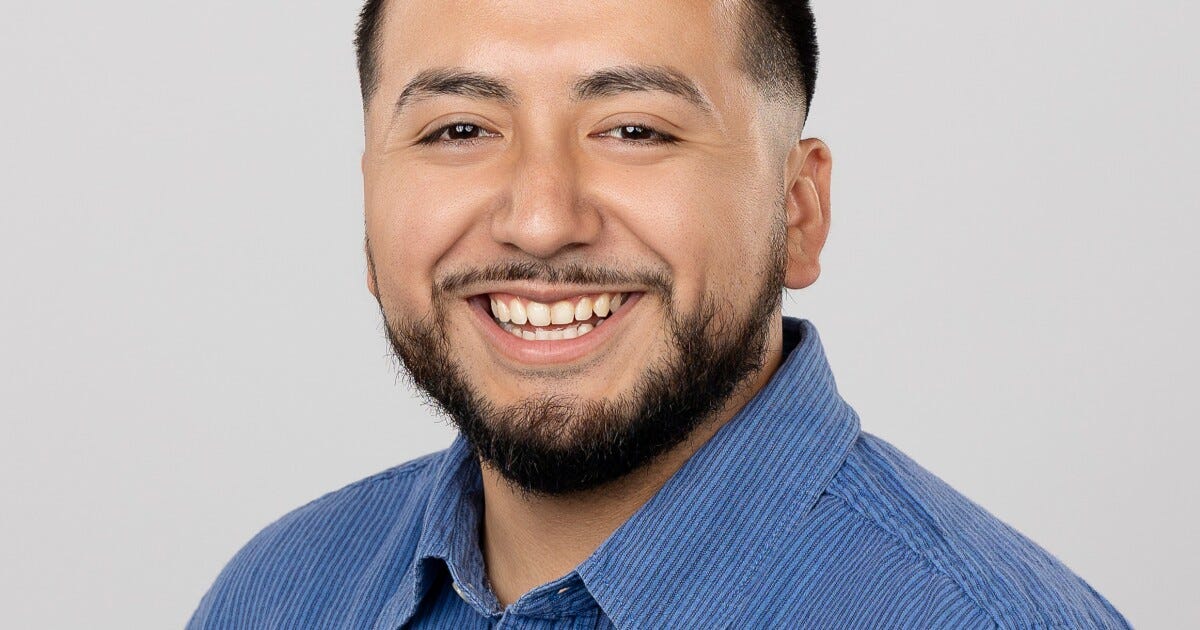
José Sandoval didn’t set out to become a crucial voice making connections on public radio with Spanish-speaking communities. He imagined himself teaching, in fact. Or maybe even covering sports.
Then an opportunity pulled him into public radio instead.
This OIGO, I talk with this inspiring journalist about his work covering Hurricane Helene at Blue Ridge Public Radio in Asheville, North Carolina, and how public media can be most relevant to Latine audiences.
What you may love, as I do, in this discussion is Sandoval’s candid and refreshing take on emerging audience service. It’s not enough to hire a bilingual reporter or greenlight some Spanish-language initiatives, he notes, and just call it done. Real connection takes time. Trust is built slowly. Critically, one must set aside the assumption that you may already know people’s lives.
You may further appreciate how Sandoval draws a line between covering a community and being part of one. Moreover, he’s quick to point out how bilingual coverage (which we can want quick wins for) is, in truth, a years-long project.
His most affecting words for some of you might be the pitfalls of passion. Yes, I’m referring to us.
The enthusiasm of representing culture and communities is what draws bilingual and Latino journalists into this work. That care becomes a liability, Sandoval assesses, when an organization leans on it as a substitute for real investment. After all, one person can’t be expected to translate, report, produce and single-handedly serve as the connective tissue between an entire newsroom and an entire community. Not only is this unsustainable, but burnout is possible.
Serving a community and the person doing that work are the same commitment.
Read on. 👇🏽
You didn’t start out planning to work in public media.
Really, I never planned to get into public media or become a journalist. I went to school for communications. Originally, I wanted to be a teacher. I also did some freelance work with independent baseball teams because I wanted to do sports journalism. I went to community college and then Illinois State University, where I finished my undergraduate degree and did some sports reporting.
After I graduated, I realized how tough the industry was to break into. I was looking for jobs all over the place when I stumbled upon a position as a bilingual producer at WNIJ. They were launching the Hola initiative, which focused on bilingual and Spanish-language content.
That started my journey in public radio. I was there for a little over a year, and I also did a remote internship with NPR’s content development team, where I helped with podcasts. It was a great experience.
But afterward, I needed a job. I grew up in Elgin, Illinois, about an hour west of Chicago. My parents were born in Mexico, so I’m Mexican American, and I’m very proud of my heritage. My parents came here and sacrificed so much. They worked long hours just to pay the bills and keep a roof over our heads. I felt a lot of pressure to find a job where I could get a salary and benefits. I didn’t care where it was.
So I stuck with public radio. I applied all over the country and eventually ended up in Asheville, with Blue Ridge Public Radio.
I’m not a traditional public radio person. I don’t have a traditional journalism-school background. The love for journalism and the desire to do this as a career really grew from my experience at Blue Ridge Public Radio.
How did covering Hurricane Helene change your understanding?
I learned the importance of language access firsthand.
At the time, I was the All Things Considered host and a general assignment reporter. When Helene hit, we started incorporating Spanish-language programming, and a lot of that was being done by me.
I was reporting in the field all day and then coming back to the studio and continuing to host. I was doing bilingual work, sometimes in English and sometimes in Spanish.
One of the biggest lessons was how important it is to have resources and people in a newsroom when a disaster happens. You need collaboration, people who know what to do, and guides and resources ready to go.
It also taught me how important it is to build relationships with Spanish-language media organizations. We published and worked with Latino media in North Carolina, including reporters who were already on the ground with the community. Organizations should not be afraid to collaborate with Spanish-language media. It benefits both sides.
What did you learn from listening to the community afterward?
We eventually had a listening session, and we learned that very few people in the community were listening when we put Spanish programming on the air. That was eye-opening.
It also made us ask: Why are we putting all these resources and my time into something if we don’t have the audience, and we don’t know how to reach them?
That’s why I think community listening sessions are so important. They can seem annoying to some people, but they’re incredibly valuable. Talk to community members, nonprofits and organizations. Ask them how they get their news. Ask them what’s the easiest way to reach them.
The answer isn’t necessarily going to come from a nationwide study or a statewide study. You have to go into your own backyard and ask people. That’s the easiest way.
How does your non-traditional journalism path shape how you connect with people?
I’ve worked nine-to-five jobs. I’ve worked retail. I’ve done random jobs just to make money. When I graduated college, I was struggling to pay student loans and save money. I was living paycheck to paycheck.
I’ve been exposed to so many different people through the jobs I’ve had. Different backgrounds, different personalities. I think that’s helped me get people to open up and talk about their lives and what’s happening in their communities.
I relate to people more from a human standpoint. Unless I make it explicitly clear that it’s an interview and an on-the-record conversation, the conversations I’m having with people are just two human beings connecting.
My time in rural North Carolina helped, too. Asheville is a blue bubble in a very red region, so I had to talk with people from different sides of the political spectrum. I also encountered people who looked at me differently because of my skin color. That taught me how to communicate with people and put my own feelings in the back. We’re not part of the story. What’s happening with people is the story.
I love journalism, but journalism isn’t who I am. It’s what I love to do. There’s a difference, and I think that helps when you’re connecting with people.
What did you learn from helping launch bilingual programming at WNIJ?
The intention was always great. They were trying to fill a gap because there was such a large Latino population in Illinois and the surrounding area. But they were also figuring it out as they went. There were very few models to follow.
Looking back, I think some questions should have been asked before launching the initiative: Who is the audience? How are we going to reach them? Is it social media? YouTube? Livestreaming? Radio? Do we know that the audience is actually there?
You also have to invest resources. You can’t expect one or two people to do all of that work. Something like this takes years to build. It takes years to build an audience and years to build a connection with a community, especially if you’ve never done it before.
You’re now covering Latino communities in the Finger Lakes region for WXXI. What excites you about the community there?
In Western New York, it’s very different from where I’ve lived before, although parts of it remind me of the suburbs of Chicago.
One of the first things that excited me was Rochester’s huge Puerto Rican population and the history that connects the city to Puerto Rico. Puerto Rican workers were brought to the region beginning decades ago, and the history of Rochester is intertwined with Puerto Rican history.
There’s also a growing population of Mexicans, Dominicans, Guatemalans and people from other countries throughout the region. That excites me because there are so many stories to tell.
I’ve wanted to cover communities for years, and now I get to do it in a region with a really vibrant community that is intertwined, united and visible. There’s so much happening here that people sometimes forget about.
What does public media need to understand about covering Latino communities?
If you really want to reach a community, there has to be a two-way street. That connection doesn’t happen overnight. It’s not as simple as hiring a bilingual reporter and assuming, “They’re part of the community. They can get us all these stories.”
That’s not how it works. Just because I’m Latino doesn’t necessarily mean I’m part of every Latino community. The Latino community where I am now is different from the Latino community I grew up with in Illinois. Every community is different.
Sometimes communities feel like a journalist parachutes into the community, grabs a story and leaves. You have to be there when big things happen, but you also have to be there for the small things. Meet community leaders. Invite people into your newsroom. Open your doors, and invite younger generations to learn what we do and how we do it.
That connection takes time, resources and commitment. Commitment is the number one thing. There has to be a willingness to actually build the relationship.
What advice would you give bilingual journalists who are being asked to represent an entire community?
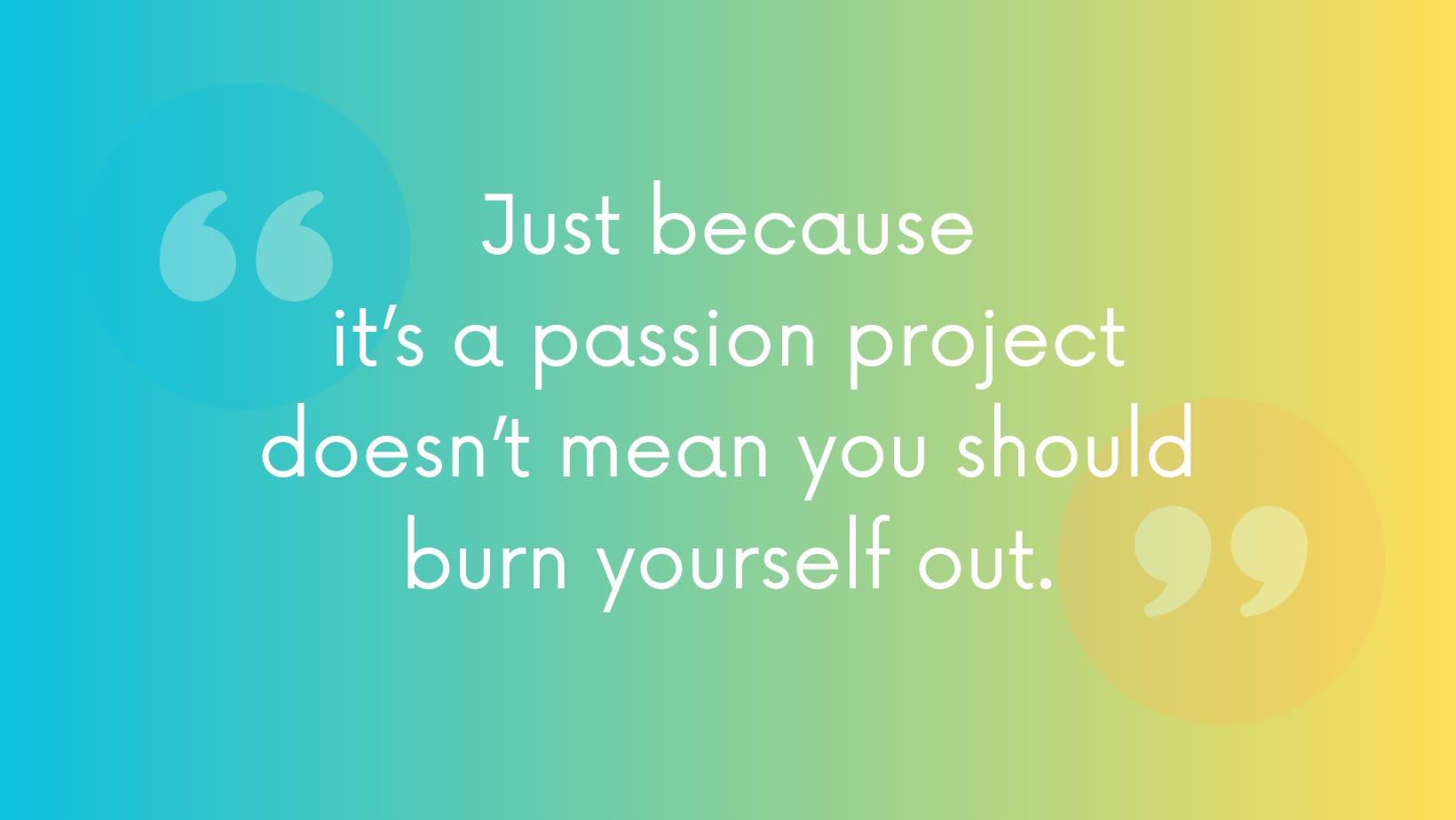
The number one thing I’d say is: Just because it’s a passion project doesn’t mean you should burn yourself out.
There’s a sense of pride in doing this work. There’s a passion because this is our community, but we shouldn’t be expected to translate for an entire newsroom, translate interviews or take on every other bilingual responsibility just because we’re passionate about the work.
Take time to get to know the community. Understand its history and background. Attend community meetings as a community member. The more people see your face, the more you build relationships. Grab a cafecito. Be part of the community.
And especially given the current political climate and immigration activity happening throughout the country, journalists have to ask themselves whether a story is worth the reward over the risk. Sometimes there are very real consequences for the people we cover. We have to advocate for people in our communities with our newsroom leaders. I’ve personally shut down stories because the potential risk or consequence for a source wasn’t worth it.
And make sure you get paid.
You’re not just doing the work of one reporter. You’re doing the work of an English-speaking journalist and a Spanish-speaking journalist. If you’re bilingual and Latino and you speak both languages, make sure you’re getting paid for being a bilingual reporter.
Why do you think it’s important for journalists to think about their own well-being?
We love this work. At the same time, we have to take care of ourselves.
There’s a lot of emotional and mental fatigue and stress that comes with seeing what’s happening in our communities. Sometimes you become numb to it, or you tell yourself you’ll deal with it later.
For Latino journalists, bilingual journalists, and people covering Latino or immigrant communities, some of these issues can potentially affect your own family. Some of these fears may exist in your own community, so we have to take care of ourselves at the end of the day, too.
Journalism is an amazing profession. We have to take care of ourselves.
You’ve also talked about the importance of supporting the next generation of journalists. What does that look like?
We need to support young Latino and Hispanic journalists and create opportunities for them to enter the profession.
I’m trying to meet with people who work with schoolchildren so I can talk to them about what I do for a living. You don’t have to take the traditional route. There are so many different places you can work in media.
I’m 28, and I still think it’s important for people my age to give back to the next generation. If we’re not giving back, if we’re not uplifting younger people, what are we doing? They’re the ones who are going to step in.
We have to give them hope and make sure the opportunities are there. Media organizations need to do better at giving people a real shot. 🟢

Cafecito: stories to discuss ☕
Volver. The Latino Media Summit is back. 🎉 Agenda and registration for the October event are live.
Coverage with care. Chicago Public Media’s Alma Campos is part of a Poynter webinar on reporting on mental health angles related to immigration. 💻
Serving bilingual audiences. Agencia Media has a new piece on ways other media and election campaigns are successfully building relationships with bilingual audiences. 💬
Election issues to watch. Pew Research Center has a new survey of Hispanics on their feelings about the American Dream. 🗽 Affordability and home ownership possibilities are among the major questions.

El radar: try this 📡
Report on books. Bookstore stories seem to be very in at newsrooms for the moment. 📖 And this Texas Public Radio piece on a San Antonio shop shares the unifying effect of Hispanic books on the community.
Investigate immigration enforcement’s impact on local business. Marketplace did refresh reporting on how Latino businesses in several major cities are faring following aggressive ICE presence. 💼
And on community vibes. KERA captures the worries of U.S. citizens of Latinx descent amid enforcement activities. 🤔
Explore local areas. A nice job by KGNU to dig around for local Latinx history.
Highlight rural help. Minnesota Public Radio has an insightful look at how nonprofits and community groups located in rural areas are providing support for Latine immigrants in their regions. 🏠
Keep spotlighting health topics. Mental health services for Spanish-speaking residents are getting more attention, and this story by The Conversation touches on an important matter, dementia care. 🫶
The next OIGO arrives Sept. 18. I spend many OIGOs on text, but this edition will be focused on helping your communities spot visual disinformation and AI-generated images related to immigration for the midterms. I hope it can help you.
🥤 You can buy me a coffee if you’d like to support the newsletter.