


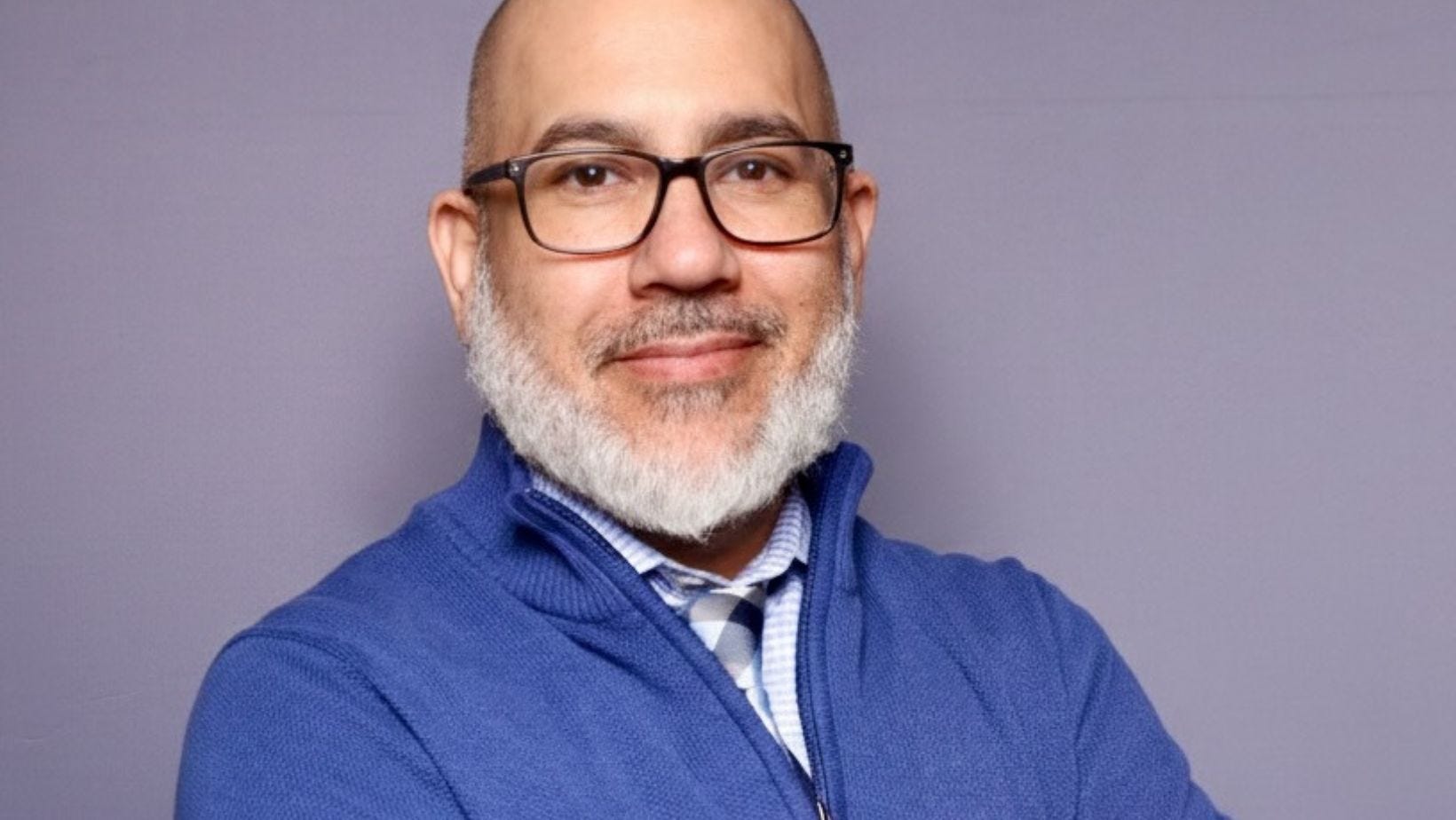
WBUR’s Chief Content Officer, Victor Hernandez is one of those people who brings newsroom experience and strategic vision, but is equally focused on a real commitment to community engagement. He has spent around three decades in journalism, which has included local TV stations to CNN, and now to public media leadership roles in Seattle and now Boston. Hernandez has witnessed firsthand how media evolves and, sometimes, falters.
He’s got quite a story to tell this OIGO.
Today, with waning public trust in journalism and shifting audience behavior, what you will learn is that Hernandez is tackling how public media redefines how the industry connects with the communities it serves. Like many in public broadcasting, he is expressly not about chasing clicks or gaming algorithms. Instead, you will get a glimpse at how Hernandez maps out building relationships, honoring our mission, and transforming the people who engage with public media into lifelong listeners and advocates.
Hernandez talks about his career as a series of “happy accidents.” You’ll learn why in a sec. In this wide-ranging conversation, he’ll also open up about the moments that shaped his career and the hard lessons he learned along the way. He will also give you a glimpse into the strategies WBUR is using to deepen trust, improve representation, and strengthen public media for the long haul. 👇
Why do you describe your career as a series of “happy accidents”?
Not so much because it was random, but because early choices, especially internships, opened doors I didn’t expect.
I started in print journalism, thinking I’d follow in my mom’s footsteps. But a summer TV internship, originally just to escape the Fresno heat, turned into a part‑time job in a newsroom. That experience changed everything. It pulled me into broadcast journalism and set me on a path that eventually led to national work at CNN.
Later, a recruiter called about CNN after a convention I didn’t even attend. That’s the kind of unexpected moment that, looking back, feels accidental, but incredibly influential. The lesson I share with young journalists: internships matter, and being present, even if you don’t know why at the time, pays off.
What core principles did you take from your time at CNN into public media?
Journalism fundamentals such as ethics, integrity, a commitment to telling important stories are constants no matter the newsroom size. Whether you’re in a small town or a global network, you’re accountable to the public. The scale, like the resources or audience size, may change, but the essence of what makes journalism meaningful stays the same.
One of the biggest takeaways from my time in broadcast news was how deeply those principles matter in every decision. That’s a lesson I carry into every strategy conversation now: integrity isn’t negotiable.
What inspired your move from commercial media to public media?
After almost 20 years in commercial news and some time at a tech startup, I realized I missed being in the newsroom trenches, leading people and ideas every day. The opportunity at Cascade Public Media came at the right time. It was a chance to bring together legacy broadcast and digital newsrooms, innovate and help shape the future of local public media. Being in a tech‑rich environment like Seattle was very exciting.
So, that was another “happy accident” in timing, but a deeply intentional next step in my career.
What’s changed at WBUR since you arrived?
There’s so much change! In journalism broadly and at WBUR specifically. One key shift has been a deeper focus on relationships rather than transactions. In commercial media, success is often measured by reach and volume. In public media, we want to reach audiences, but we’re equally committed to building transformational connections. People should feel: “I can count on this station. They know me, and they care about this community.”
That means listening deeply, engaging directly with audiences, and reinforcing trust every day.
With public trust in media declining, how can public media help bridge those divides?
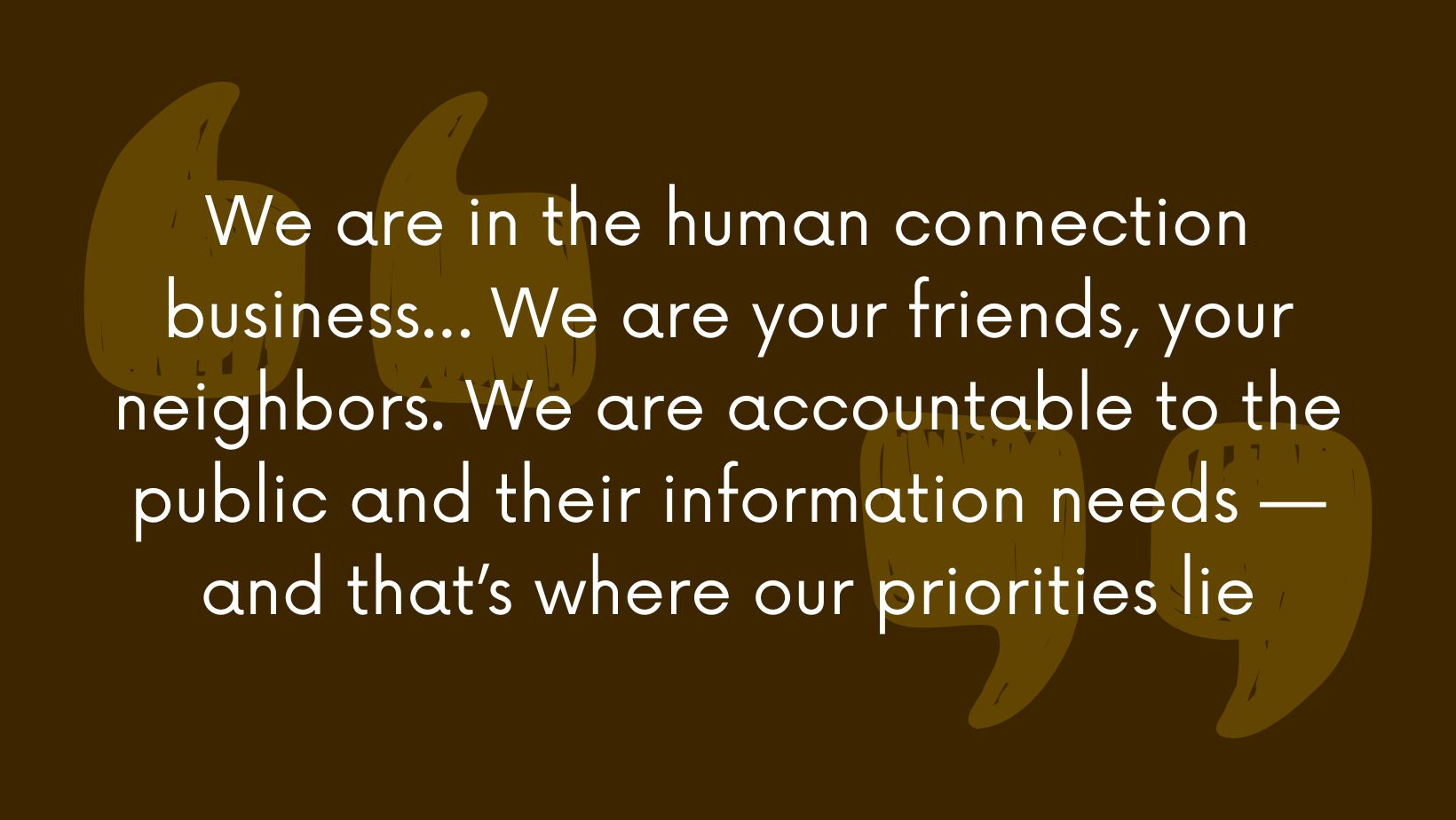
It starts with connection. Pew Research found that over 80 percent of Americans have never met a journalist. That distance erodes trust. So we go into the community. We meet people where they are. In person, at events, conversations, listening sessions. We show up not as distant observers, but as neighbors.
It also means understanding discoverability. People don’t wait for headlines anymore. The algorithms shape what they see. So part of our work is making sure valuable journalism finds people, not just hoping they stumble upon it.
How do you think about representation and inclusion?
Representation can’t be superficial or performative. After 2020, many organizations made quick gestures that didn’t last. True change requires building deeper pathways: mentorship programs, training, partnerships with journalism education and ongoing investment in underserved communities. It’s not a quarterly target. For me and us, it’s a long‑term commitment.
When I joined WBUR, about three percent of our live listeners were Hispanic or Latino, while that demographic makes up roughly 12 percent of Boston’s population. Through intentional work like better coverage and community engagement, we grew that audience to nearly nine percent. That’s real progress, but still short of where we want to be. It underscores that this work is slow, intentional, and ongoing.
What achievements are you most proud of at WBUR?
We’ve launched a lot — but one highlight is the WBUR Ideas Festival. In its first year, nearly 10,000 people participated across 200 sessions. It became a new space for community engagement, conversation, and connection — and it has helped fill gaps left by federal funding cuts. We’re planning to build on that in 2026.
I’m also proud of the pace of innovation here. We’re constantly experimenting, collaborating, learning from other stations, and sharing what works. Public media thrives when we work together.
What advice do you have for early‑career journalists?
My top piece of advice: do informational interviews. They’re low‑pressure but incredibly helpful ways to learn about roles, skills needed and what success looks like. They build relationships long before a job opens, and they give you insight into areas you might need to grow into.
And remember: imposter syndrome is real for everyone, even senior leaders. But people don’t put you in rooms because they feel sorry for you. You earned your place. Speak up, contribute your perspective, and keep learning.
What does it take to succeed in media today?
I learned as much from bad bosses as good ones. Use those experiences to define how you want to lead differently. And above all, enjoy the work.
Newsrooms are intense, messy and chaotic. If you love that, you’ll find joy in the challenge. As someone once said to me: If we wanted easy, we would’ve gone to med school. We’re in this because we believe in the mission, and that’s what will sustain us. 🟢
Cafecito: stories to discuss ☕
New leadership. Luis Estrada, formerly of KPBS, has been chosen to lead community radio station KVMR. 📻 Current has the news.
Watching Latinx voter viewpoints. Arizona PBS dives into a new Pew Research Center study. With midterms this fall, Hispanic perspectives on President Trump are souring. 📉 The BBC is among many tracking this story as well.
Funding for ICE counter-organizing. The Latino Community Foundation has announced the creation of the Community Protection Fund, “a bold investment in grassroots responses to the escalating threat of chaotic, violent immigration enforcement.” 🌩️ I’m guessing many organizations may apply.
New media. Arkansas GRITA is a new volunteer-based organization seeking to fill information gaps related to immigration in the state. 💻 The Arkansas Times has the full story.

El radar: try this 📡
See if universities are consolidating student services, including those for Latinos. Wisconsin Public Radio investigates a new initiative by its university to merge its Black, Latino, veteran and other student groups like a single unit. Reactions of students and faculty are featured. 📣
Investigate the aftermath of ICE. The Chicago Sun Times comes back to communities impacted by November’s flood of ICE agents and national showdown that ensued. 💥 Residents told the nonprofit affiliated with Chicago Public Media about their feelings since.
Keep tracking Latinx perspectives on the environment. This one from KNPR offers a fresh view on an issue Hispanic communities oftentimes express care about. 🌳 Well worth diving in.
Spotlight areas of community growth. KMOV highlights gains in St. Louis among Latine populations. 📊 It’s not breaking news, per se, but such is also one of those core stories public media audiences like: reports that help them understand changes in their community and their neighbors.
Check in on local construction jobs. USA Today has a release that seems generic, but contains an important undercurrent. 🏗️ With immigration enforcement presumed to affect some sectors of industry, what is happening among blue-collar labor forces? It seems like a valuable story for all communities.
The next OIGO arrives Mar. 13. We’re headed back to the spreadsheets and talking about what you need to know about bicultural Latinos — listening habits, consumer trends and more for public media to keep an eye on. New data is in, and you will be in the know.
🥤 You can buy me a coffee if you’d like to support the newsletter.