



I came to public media as a teenager transfixed by things I did not know. It was a window to a different world. Yet I was, in effect, also consuming news that rarely reflected my family’s experience.
That memory is why I read the latest Media Insight Project research the way a physician reads a chart: looking not just at what the data says, but at what it reveals about us and our interests.
The 2026 report, released last week, offers data that is less abstract, and is instead instructive. For those of us in nonprofit journalism who serve Latino communities, this report is a mirror to what we may have been avoiding.
And when you layer the study against what Nielsen, the Latino Donor Collaborative and other groups have been tracking on Latino audiences specifically, a particular picture emerges. The challenge is that public media’s path goes through communities it has historically underserved. But this can change and become an opportunity.
What do you need to know about this new Media Insight Project research?
Latino public radio audience data 📊
Top of the list is ensuring your organization sees generational research as a cultural exploration.
The MIP report is a generational breakdown. One stat: 74 percent of adults 65+ rely on TV for daily news, compared to just 44 percent of teens. The recent Techsurvey tracks similar numbers for radio. Given that Latinos now represent 25 percent of the U.S. youth market (per 2025 LDC data), this is fundamentally a Latine audience problem dressed up in generational language. Moreover, when public media cannot find Hispanics in our metrics, it is a serious inheritance problem.
Growing up bicultural, I watched the evening news with my family. My parents wanted to position me for a better economic and educational place than they rose to, and they reasoned information is power. For young people now, the medium is shifting. Yet the 74 versus 44 percent generational gap in television news consumption reads, for me, less as a statistic about platforms and more as a confirmation of something I have watched unfold across a lifetime: each generation of Latino youth has been recalibrating their relationship to institutions.
You see this also with digital adoption. MIP’s study mirrors Nielsen’s observation that Hispanic consumers are 115 percent more likely than the general population to use creator tools like CapCut, with outsized TikTok and YouTube engagement on top of that. These are basically the same phenomenon viewed from different angles.
It’s valuable for public media to show up where teens are consuming daily news. In missing out, we are losing a generation and the fastest-growing demographic in the country. That’s a strategic miscalculation with compounding consequences.
The influencer question (and opportunity) 📱
MIP finds that 81 percent of teens get news and information from influencers. That’s not a small thing. Unlike national news, where Democrats trust the media at more than double the rate of Republicans (22 percent vs. 9 percent), influencers don’t carry that baggage. The Digital Democracy Institute of the America’s 2025 research adds texture here: Latino audiences gravitate toward content that teaches them something and leaves them feeling genuinely informed rather than anxious.
Consider that more than a preference. It may be a content strategy waiting to happen.
Still, I share some unease with peers about a model that may simply be supplanting our credibility, I have watched, across my career the slow erosion of the distinction between a reporter who has cultivated sources, navigated editorial standards, and accepted accountability for what they publish, and a creator who has cultivated followers, navigated an algorithm, and accepted accountability to no one in particular. These are not equivalent knowledge-making practices, and the MIP finding is, for me, less a market insight than a civilizational one.
I also acknowledge such alliances can be a defensible path forward. For public media trying to reach bicultural Latino audiences who may be skeptical of institutional media for entirely different reasons, like underrepresentation, irrelevance or tone, the creator space offers something fresh possibly. A trust architecture already exists and doesn’t need to be rebuilt from scratch.
The MIP report notes that 50 percent of consumers prioritize transparency about a creator’s mission and partnerships. That finding likely means this approach only works if it’s honest about what it is. Audiences are remarkably good at detecting when authenticity is being performed rather than practiced.
Local news insights 📝
If you need more convincing, the study may win you to the importance of local news.
Place-based journalism remains the most trusted sector in journalism, per MIP. That’s encouraging. What’s less encouraging is the UCLA Latino Policy & Politics Institute research that only 2 percent of daily newspaper articles mention Latinos.
Many have written about this gap for years. I have sat in newsrooms where the absence of Latino stories was not a policy decision but an ambient assumption. I’ve experienced this as a default so naturalized it required no defense. What that number means, in human terms, is that millions of people have spent decades consuming media and learning, day after day, that their lives do not constitute news.
Trust erodes in that daily, unremarkable arithmetic.
Public media stations occupy a crucial position here. As Nieman Lab just pointed out, people feel overwhelmed by news that isn’t local. In news deserts, which are proliferating, our outlets are often the last institutional voice doing local reporting. That’s an enormous amount of potential leverage.
Can your local be bilingual? Pew’s 2025 research shows that immigrant Latinos tend to prefer Spanish-language news, while U.S.-born Latinos want English-language reporting. Such offers more avenues to engage. However, the implication is less “do both” as a checklist. In fact, trying to do both without enough resources will lead to frustration and burnout. Rather, as I noted before, the strategy is relevance.
MIP identifies some gateway topics that build lasting news habits. School calendars, local weather, traffic and events are on that list. For young Latino audiences, those habits need to be built by reporters who understand the community from the inside.
A case for hopeful journalism 🙏
Only 10 percent of Americans say the news gives them a hopeful view of the world. A third of Americans report feeling overwhelmed or stressed by their news consumption. Those are striking numbers on their own, but they carry additional weight in Latino communities, where misinformation circulates heavily through private channels, creating a kind of anxiety that’s difficult to counter.
We also need to have a discussion about content choices. Early in my career, I defaulted, as most of us are trained to do, toward urgency and crisis. It took me longer than I would like to admit to recognize that for communities already living inside ongoing challenge, that register was redundant. Another trend is also worth watching.
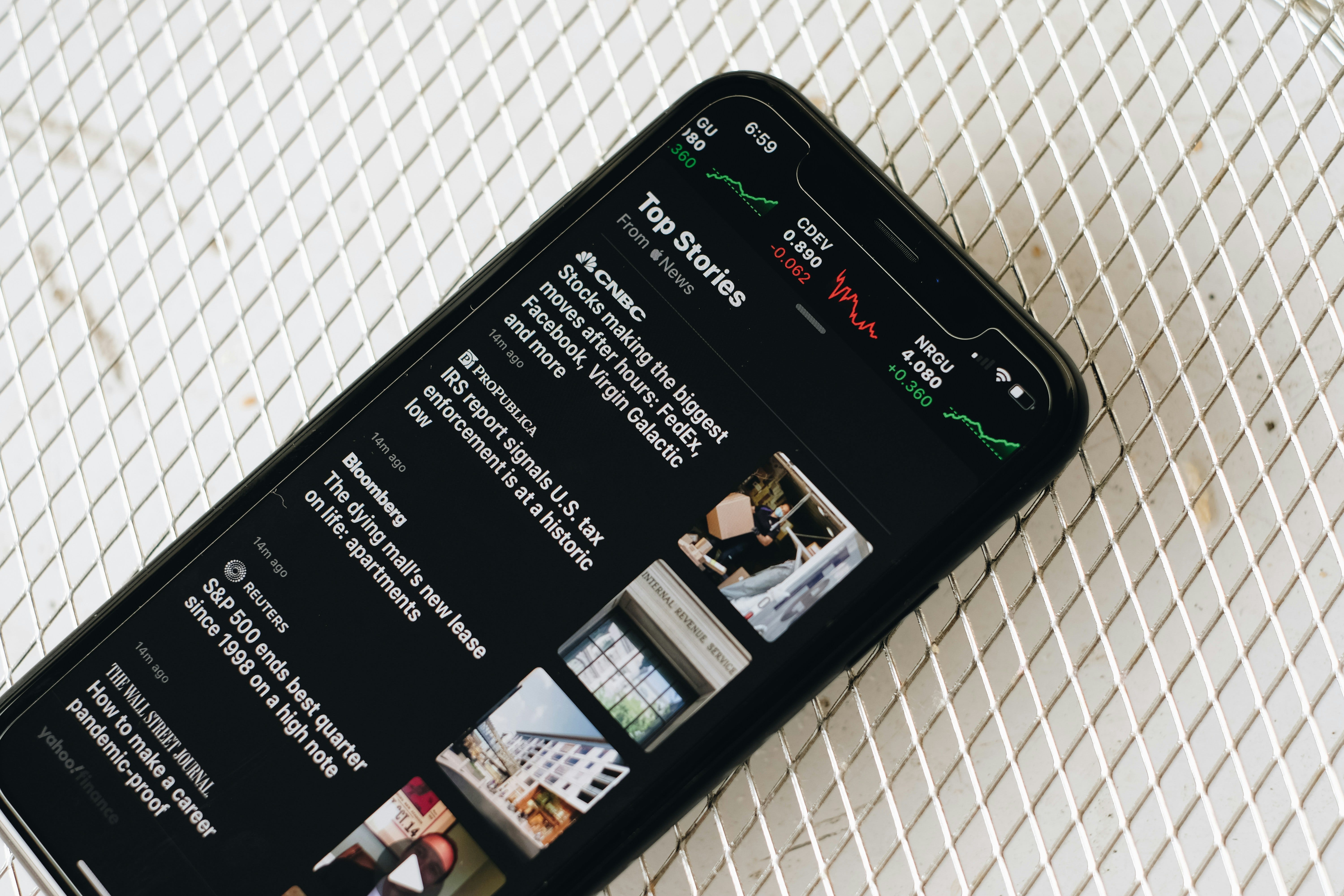
MIP finds that 29 percent of people are actively building “digital boundaries” around their news intake. Why should you worry? For public media, the risk is being categorized as a stressor rather than a resource. Being something to consciously limit rather than seek out is an existential threat.
I do not advocate that the answer is to soften coverage or avoid difficult stories. My encouragement is to invest in solutions-oriented journalism that treats community resilience as genuinely newsworthy. That shift is a belated recognition that resilience is as factual as crisis, and that choosing to cover only one of them is its own form of editorial distortion.
I still go back to this 2016 Hearken opinion on how media can bias toward hard news. I ask you to see the breadth of our coverage as part of an honest account of how communities actually function. See DDIA’s finding above about how Latino audiences seek content that makes us feel informed.
We want emotional presence. That is sustainable engagement.
Three to-dos ☑️
Take a moment to reflect on three shifts:
First, move from conveyor belt logic to network logic. During my Maynard Institute training, I was greatly impressed by Cal Poly’s Mustang Media Group. Students look at a story and think intentionally about platform—what story is best for radio, for digital, for social and so on—rather than simply assigning and posting it, etc. They take the audience seriously as a starting condition rather than a finishing one.
Second, look at practical local information as an entry point. Wonder why so much of radio relies on traffic and television on weather? These are much more than small topics, but habit-building. When they are covered by outlets who are genuinely embedded in communities, audiences start to rely on them and relationships blossom. To me, they also are foundational content for what could be what Commoner recently called local backbone infrastructure.
Last, as I said at a recent Bay Agenda panel, take AI literacy seriously as a civic service.
MIP finds that 36 percent of teens feel confident distinguishing AI-generated content, compared to 13 percent of older adults. That gap has real consequences for misinformation exposure across generations. Public media has both the credibility and the reach to run intergenerational media literacy programming. KQED is one example. Latine families navigating a complex environment are a natural audience.
I am forever hopeful for public media. The window is still open. All it takes is for institutions to be curious about what it would take to show up differently. 🟢

Cafecito: stories to discuss ☕
Video series. Radio Campesina, Caló News Arizona and the Latino Media Collaborative have produced El Malcriado, a program spotlighting the growing mental health crisis tied to immigration raids and ICE enforcement. 📼
Salazar win. NotiVision Georgia has won the Rubén Salazar Award for its reporting on incarceration and its impact on Latinx communities. 🏆 In Spanish.
Creator study. The Center for News, Technology & Innovation has a new report on the more diverse and thinly resourced web of “indie info providers.” 🎥 Broad definitions, but also instructive for public media.
To watch per midterms. The Associated Press chronicles the increase of Hispanic elected officials amid immigration enforcement controversies. 👀

El radar: try this 📡
Track Latine murals in your area. A delightful look by New Hampshire Public Radio on art in the community, and how murals share stories. 🎨
Cover local gatherings. WHYY offers a look at a regional Latinx summit and the reasons that organizers feel such is crucial right now.
Note Hispanics and the outdoors. KJZZ offers personal stories along with a look at a new study on non-distance barriers for enjoying Arizona’s vast parks and outdoor spaces. 🌵

The next OIGO arrives May 22. It’s been a minute since I wrote you about AI and potential for inclusion. The final newsletter of the spring will assess how orgs seeking to create more Spanish-language content can assess the latest AI models.
In October, OIGO turns five. A common question I get is how people can help me. You absolutely don’t have to, but it’s genuinely appreciated. For a short time, those who want to support can pick up a 20 percent discount on an annual subscription, which supports OIGO. Get it here, and gracias.
🥤 You can buy me a coffee if you’d like to support the newsletter.